College Mascot Dogs: Ranks, Rap Sheets, and Funerals
PerfectDogNames · September 14, 2026 · 12 min read
Universities do not have dog mascots — they have dog institutions. From Handsome Dan's FBI file to Uga's air-conditioned kennel, Smokey's rap sheet, and funerals fit for LIFE magazine.
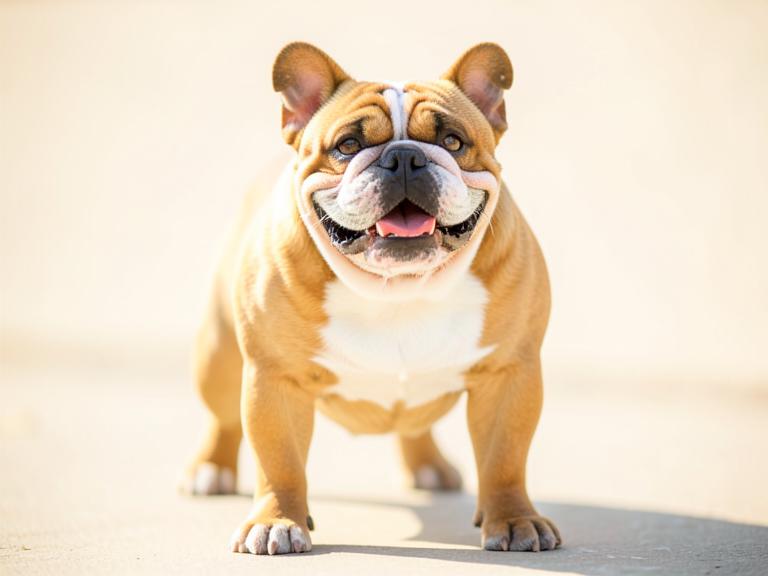
When Tennessee puts Smokey on the injury report for heat exhaustion, or Texas A&M insists you address Reveille as ma'am, or Mississippi State buries a bulldog in a glass-topped coffin while the band plays, you are not watching a school with a dog mascot.
You are watching a school with a dog institution.
College athletics did not invent the idea of a living emblem. It invented the bureaucracy around one: hereditary titles, student IDs, air-conditioned kennels, funeral protocols, FBI involvement, and the occasional hamburger left as ransom. The dogs, for their part, mostly want snacks and shade. The universities want continuity. That gap is where the legends live.
Patient Zero: Handsome Dan
Yale got there first. In 1889, a blacksmith named Andrew B. Graves bought a bulldog for five dollars and introduced him to the campus as Handsome Dan. The breed of record for the modern line is often given as an Olde English Bulldogge of the XIX Kingman type — a working-looking bulldog built less for cartoon wrinkle and more for surviving a Saturday in New Haven.[1]
Dan I did not fade into scrapbooks. After his death he was taxidermied and installed in what is now the Payne Whitney Gymnasium, where he still greets anyone who wanders past with the fixed stare of a dog who has been on payroll longer than most alumni.[1]
The dynasty that followed is less a pet succession than a case file.
Handsome Dan II was stolen by Harvard students in 1934. The ransom note, according to period press, involved hamburgers and a pair of boots — the kind of practical joke that only works when both schools treat the dog as state property. The New York Times covered it with the solemnity usually reserved for diplomatic incidents.[2]
Handsome Dan III was retired early for a simple reason: he was afraid of crowds. Even Yale admits that temperament can end a reign faster than age.[1]
Handsome Dan XII, in 1979, was taken before a Princeton game. The FBI got involved. That sentence should not exist in a story about a campus pet, and yet it does.[1][3]
A century-plus later, Handsome Dan is still the template. Every other school that put a dog in a sweater is, whether it admits it or not, arguing with Yale. The numerals after the name are not branding fluff. They are an admission that the office outlives the dog — and that the office is the point.
Looking for a name that fits a bulldog personality — dignified, stubborn, faintly judicial? Browse English Bulldog names in the directory.
The Bulldog Industrial Complex
Once Yale proved a bulldog could outlast a presidency, the Southeast industrialized the idea. What started as a campus pet became logistics, donor stewardship, and sideline theater with a pulse.
Uga of Georgia
Georgia's Uga line is the gold standard of canine institutionalization. Owned and managed by the Seiler family for generations, each Uga receives the kind of logistics package usually associated with a visiting dignitary: a student ID, an air-conditioned doghouse near Sanford Stadium, and travel by Suburban.[4]
Uga XI, better known as Boom, did what mascots are not supposed to do on national television — he lunged at an Auburn player in 1996 and earned a Sports Illustrated cover for his trouble.[5] The program has also sent Ugas into the broader culture: a turn in Midnight in the Garden of Good and Evil, and a memorable Sugar Bowl confrontation with Texas's Bevo in 2019 that reminded everyone live animals do not read the script.[4][6]
Georgia did not invent passion. It invented the climate-controlled kennel as competitive advantage.
Bully of Mississippi State
Mississippi State does not merely retire a bulldog. It holds a Passing of the Harness.
Bully XXII, Dak, is only the latest in a line that treats succession like a cabinet appointment.[7] The tone was set early. Bully I died in 1939 and received a funeral elaborate enough for LIFE magazine — mourners, ceremony, the full institutional send-off.[8] Bully II was later killed by a bus, which is a cruelly ordinary end for a creature with a title. In 1974, Ole Miss students kidnapped a Bully; the rivalry needed no extra fuel, but it got some anyway.[7][9]
If Yale gave the genre a founding myth, Mississippi State gave it liturgy.
Jack, Blue, and the rest of the roster
Not every bulldog program aims for Southern gothic.
Jack, Georgetown's English bulldog, became internet-famous for skateboarding across campus with the serene commitment of a student who has already accepted his thesis topic.[10]
Butler Blue IV, a live English bulldog on the Butler University sideline, has been photographed with a rawhide the way other programs photograph captains with a trophy. Butler and Yale have even arranged playdates between Blue and Handsome Dan — two hereditary offices comparing notes.[11]
Quick hits from the wider bulldog and mascot-dog circuit:
- Fresno State — Victor E. Bulldog IV; earlier Victors include the memorable detail of Victor II and a bee sting that briefly turned a mascot into a medical anecdote.[12]
- Drake — Griff III (Gus), part of a bulldog line still active into May 2026.[13]
- The Citadel — Boo, a campus bulldog with military-adjacent manners.
- Louisiana Tech, Bryant (Tupper), and Gonzaga (Spike) keep the breed on payroll in smaller markets that still understand the assignment.
- Memphis and others have contested a Battle for the Bone — because once you give dogs titles, you eventually give them trophies shaped like snacks.
Working Breeds on the Payroll
Bulldogs dominate the genre, but they do not own it. Collies, Blueticks, Huskies, and wolfish lookalikes have their own org charts — and their own rules about who may hold the leash.
Reveille of Texas A&M
Reveille X, a Rough Collie (in common campus speech: Miss Rev), holds a cadet rank and is addressed as ma'am. Cadets have been known to try out for the privilege of walking her; the position is treated like an E-2 billet with better publicity.[14]
Former Reveilles are buried near Kyle Field. In 2023 the university unveiled a statue that made the hierarchy visible in bronze: the dog is not a prop. She is personnel.[14][15]
Miss Rev does not do chaos for clicks. She does protocol. That is a different kind of power.
Smokey of Tennessee
Tennessee's Smokey is a Bluetick Coonhound with a rap sheet longer than some SEC linebackers.
The tradition starts in 1953 with a student bark contest that chose the first Smokey — democracy, if democracy were mostly volume.[16] Smokey XI was retired in November 2025 for temperament reasons; Smokey XII debuted at Neyland Stadium on April 11, 2026, which is a very specific way to say the office never stays vacant for long.[16][17]
The program's greatest hits include:
- A kidnapping involving Kentucky fans
- Heat exhaustion serious enough to land on an injury-adjacent update
- Habitual tuba nips during pregame
- A 1998 medical episode involving a swallowed washcloth and an unfortunate tour of the colon
- A disputed claim that Smokey bit into the Nick Saban coaching-tree lore (the Shula bite claim still circulates in rival storytelling)
- AKC recognition moments around 2009 that reminded everyone this is, legally speaking, still a dog-show breed with a day job[16][18]
If your hound has that much plot, you do not have a pet. You have a beat reporter's favorite subject.
Jonathan, Dubs, and Tuffy
Jonathan XV keeps the University of Connecticut's Husky tradition in a living dog rather than a costume alone — a Siberian Husky line that makes the nickname literal.[19]
Dubs II at Washington is an Alaskan Malamute filling a "Husky" role on a technicality the fan base accepted years ago. Close enough for branding; exact enough for veterinary charts.[20]
Tuffy III at NC State is a Tamaskan — a wolfish, husky-adjacent breed that photographs like a legend and behaves, with luck, like a well-managed athlete.[21]
Outliers and NIL-Era Experiments
Not every program wants a bulldog with Social Security–number energy. Some want a story that travels on social media.
- Zeke the Wonder Dog (Michigan State) turned Frisbee catching into a brand; later generations leaned into the modern athlete economy, including NIL-adjacent deals that would have baffled Handsome Dan I. Browse Labrador Retriever names if you want that same sporty, crowd-pleasing energy.[22]
- Mission at Northern Illinois, Rhett at Boston University (Boston Terrier energy), Boss at Wofford, and Goldie at Tulsa show how mid-major and private schools use a living dog as soft power — cheaper than a fireworks budget, warmer than a foam head. Goldie fans can also browse Golden Retriever names.
- Grady at the University of Indianapolis keeps the model intimate: one dog, one campus, one very committed handler.
- Southern Illinois and other Saluki programs get a short note in this genre for the obvious reason — when your nickname is already a sighthound, the living mascot is less a leap than a translation.[23]
Themes From the Kennel Archive
A brief chronology of dognapping
College mascot dogs get stolen the way championship trophies get stolen — which is to say, more often than administrators put in the brochure.
Yale's Dan II (Harvard, 1934) and Dan XII (Princeton-adjacent chaos, 1979) bookend decades of bad ideas.[1][2][3] Mississippi State's Bully was taken by Ole Miss students in 1974.[7] Tennessee's Smokey has his own Kentucky chapter.[16] In 1999, thieves did not even need the dog: Smokey's suit was stolen, proving rivals will settle for wardrobe when the hound is too well guarded.[18]
If your mascot requires a security plan, congratulations. You have built an institution.
Death, funerals, and real estate
Yale stuffed Dan I and gave him permanent gallery space.[1] Mississippi State buried Bully I with LIFE magazine watching.[8] Texas A&M buries Reveilles near the stadium and raises statues.[14] These are not pet memorials. They are facilities decisions.
Funeral pomp sounds absurd until you notice what it buys: narrative continuity. Players transfer. Coaches get fired. The dog's plotline can be scheduled years in advance — which is more than most athletic departments can say about their quarterbacks.
How the job actually works
Most of these roles are hereditary in practice even when they are not hereditary on paper. Families (the Seilers for Uga), alumni donors, or university-adjacent handlers keep a breeding or selection pipeline ready. Numbers after the name — Dan XVIII, Uga XI, Smokey XII — are not cute. They are version control.
Handlers manage temperature, crowds, field access, and the eternal problem of a living animal who does not care about television timeouts. The best programs retire early for temperament. The worst pretend a stressed dog is "part of the show."
A serious word on welfare
The job has gotten safer where programs let it. Yale's turn toward Olde English Bulldogge-type dogs reflects a broader recognition that extreme conformation and stadium life are a bad pairing.[1] Tennessee's decision to retire Smokey XI for temperament in 2025 is the adult version of mascot management: the jersey is not worth the dog's panic.[17]
Live animal mascots only stay defensible if the institution accepts that the dog can quit. Ranks and harnesses are theater. Heat stroke is not. A title that outlives the animal is fine. A title that overrides the animal's welfare is not.
The Bureaucracy That Does Not Know It Is Funny
Universities will keep appointing dogs to offices the dogs cannot pronounce. Fans will keep arguing about which line is most authentic. Somewhere a freshman will earn the right to hold a leash and treat it like a commission.
The dogs remain blissfully uninterested in lineage charts. They care about shade, water, and whether the tuba player has learned anything.
That is the whole joke, told straight: we built crowns, funerals, FBI case numbers, and air-conditioned kennels around animals who would trade the title for a sandwich.
And every autumn, we do it again.
Sources
- Yale Athletics — Handsome Dan tradition — https://yalebulldogs.com/sports/handsome-dan
- The New York Times — coverage of the 1934 Handsome Dan kidnapping (Harvard–Yale)
- Yale Athletics / contemporary reports — Handsome Dan XII theft and law-enforcement response (1979)
- Georgia Dogs — Uga history — https://georgiadogs.com/sports/2018/8/3/uga.aspx
- Sports Illustrated — Uga XI ("Boom") 1996 Auburn sideline incident and cover treatment
- ESPN / Sugar Bowl game coverage (2019) — Uga and Bevo confrontation
- Mississippi State Athletics — Bully tradition — https://hailstate.com/sports/2015/3/18/Bully.aspx
- LIFE Magazine — funeral of Bully I (1939)
- Mississippi State / rivalry reporting — 1974 Ole Miss kidnapping of Bully
- Georgetown Athletics — Jack the Bulldog — https://guhoyas.com/feature/jack
- Butler Athletics — Butler Blue — https://butlersports.com/sports/butler-blue
- Fresno State Athletics — Victor E. Bulldog tradition
- Drake Athletics — Griff the Bulldog mascot line
- Texas A&M Athletics / 12th Man — Reveille — https://12thman.com/
- Texas A&M University — Reveille statue dedication near Kyle Field (2023)
- University of Tennessee Athletics — Smokey tradition — https://utsports.com/sports/2017/6/13/smokey.aspx
- University of Tennessee Athletics / local press — Smokey XI retirement (Nov 2025) and Smokey XII Neyland debut (Apr 11, 2026)
- ESPN / Tennessee reporting — Smokey medical incidents, suit theft (1999), and sideline lore
- UConn Athletics — Jonathan the Husky — https://uconnhuskies.com/sports/2018/6/5/jonathan.aspx
- Washington Athletics — Dubs — https://gohuskies.com/sports/2013/8/7/Dubs.aspx
- NC State Athletics — Tuffy — https://gopack.com/sports/2015/6/23/Tuffy.aspx
- Michigan State / NIL and mascot features — Zeke the Wonder Dog
- Southern Illinois Athletics — Saluki live-mascot tradition (program notes)